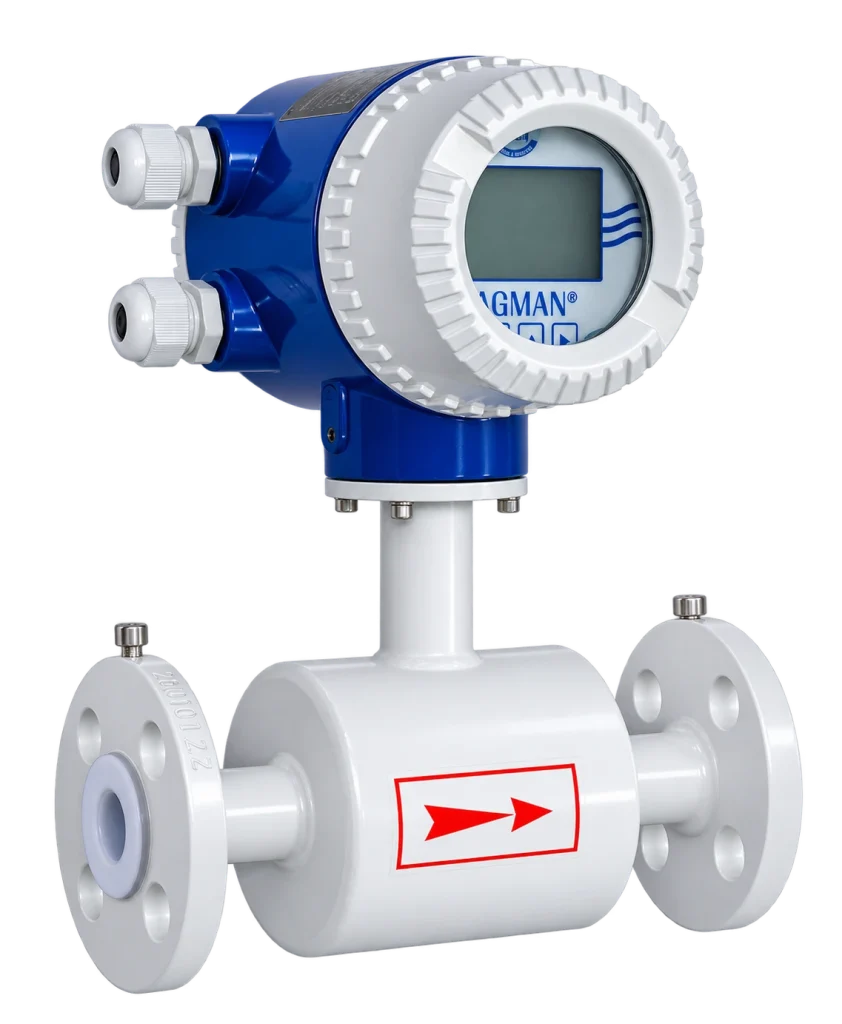
Battery operated
For remote installations where mains power is unavailable. Check out the 3.6 V battery configurations.
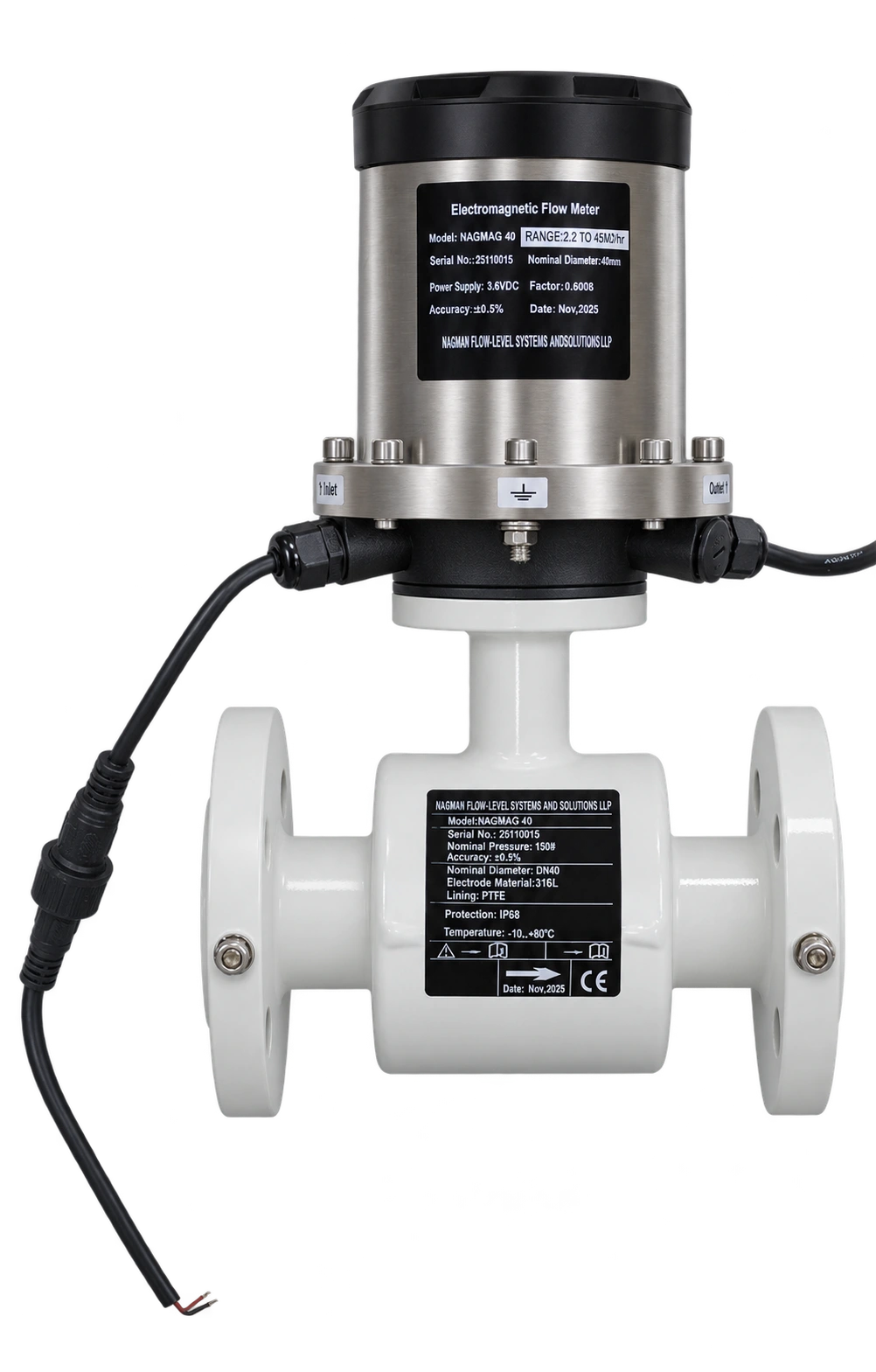
Since 1972. Precision instrumentation. Flow and level measurement. Calibration systems and services.
For conductive liquids, from measuring water to dairy to harsh chemicals. This versatile meter measures accurately.
From the water that sustains us to the processes that move industry. Find the electromagnetic flow meter that fits your liquid—and how you work.
Across the NAGMAG family
Standard accuracy of reading
High accuracy of reading
Forward, reverse and net flow
Learn more about the various applications, specifications and required details for a quick quote.
See how NAGMAG helps with water distribution, treatment, process transfers and batching.
See how much water enters your network and how much reaches each zone, from the intake to the plant or building.
Track how much water comes in, how much goes to each zone and where the totals differ. Use those readings to compare supply with consumption and narrow down where to investigate losses. For water with very low conductivity, such as some RO water, check meter suitability first.
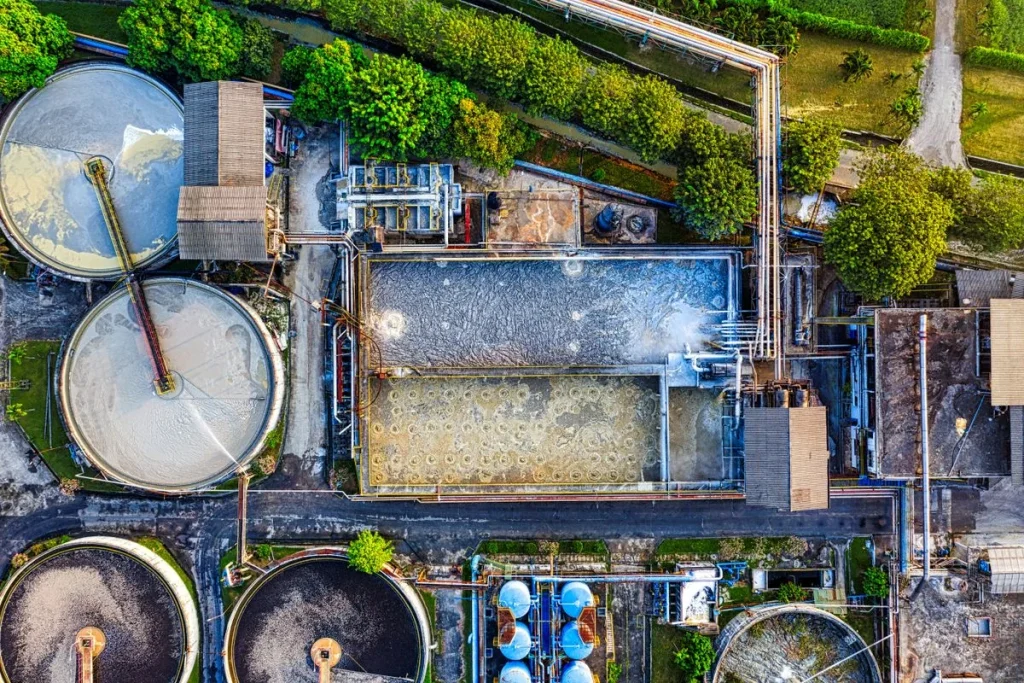
Follow sewage through pumping, treatment and discharge so operators can see how much each stage is handling.
Compare how much sewage each line carries and see when flows rise or fall during the day. A remote transmitter option lets operators read the meter from a more accessible spot.
Track how much effluent enters treatment, how much is reused and how much is discharged.
Measure how much conductive chemical you transfer or dose, with wetted materials matched to the chemical.
Compare influent, treated-water reuse and final discharge using measured volumes. Seeing those flows together helps operators understand how treatment demand changes across shifts.
Measure conductive chemical transfer and dosing with wetted materials reviewed for your process.
Track transfers from storage to the process and see how much chemical each run uses. For conductive acids and bases, we match the liner and electrodes to the chemical and its concentration.
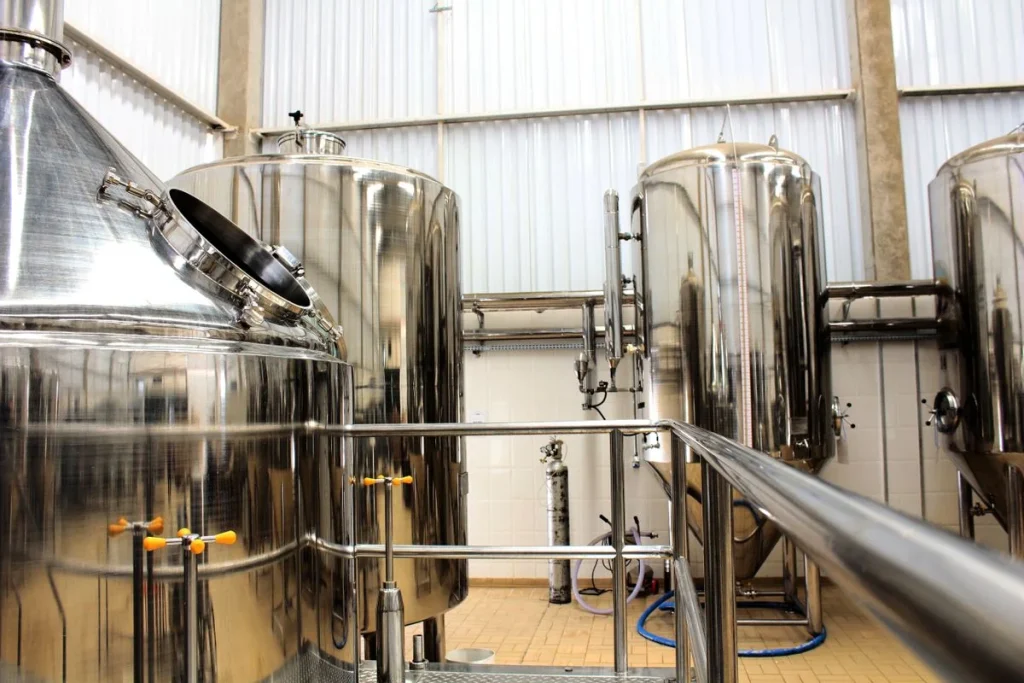
Measure milk coming in, moving between tanks and going into production, with hygienic connections suited to the line.
Use flow totals to reconcile milk received, transferred and used in each production run. A hygienic version gives you a sanitary connection for compatible product-contact lines.
Measure how much conductive liquid goes into each batch, from tank filling to ingredient dosing.
Pair NAGMAG with your PLC or batch controller to track the volume delivered and trigger a cutoff at the target. That gives operators a consistent way to dose ingredients or fill tanks across runs.
See how much water each irrigation zone receives. Compare pump delivery with what reaches the field.
Measure circulation and make-up water to see how your cooling loops are performing and investigate changes in water use.
Track ingredient transfers and process-water use. Use measured volumes to make recipes easier to repeat from batch to batch.
Track how much conductive slurry moves between pumps, tanks and process stages. Liner and electrode options help match the meter to abrasive service.
Measure water going into dyeing, rinsing and treatment. Compare use across machines or production runs to see where consumption changes.
Measure incoming utility water and track what each production line uses. Compare totals across departments to see where water use is changing.
As a conductive liquid moves through a magnetic field, it creates a small voltage. NAGMAG uses that signal to calculate the volumetric flow rate.
No rotating mechanism in the flow path. Electromagnetic induction, based on Faraday’s law.
The orange leads show the induced signal. As the liquid moves faster through the same pipe and magnetic field, the signal increases.
Start with the installation design, then add any power or process options you need. Your choices carry through to the enquiry.
For remote installations where mains power is unavailable. Check out the 3.6 V battery configurations.
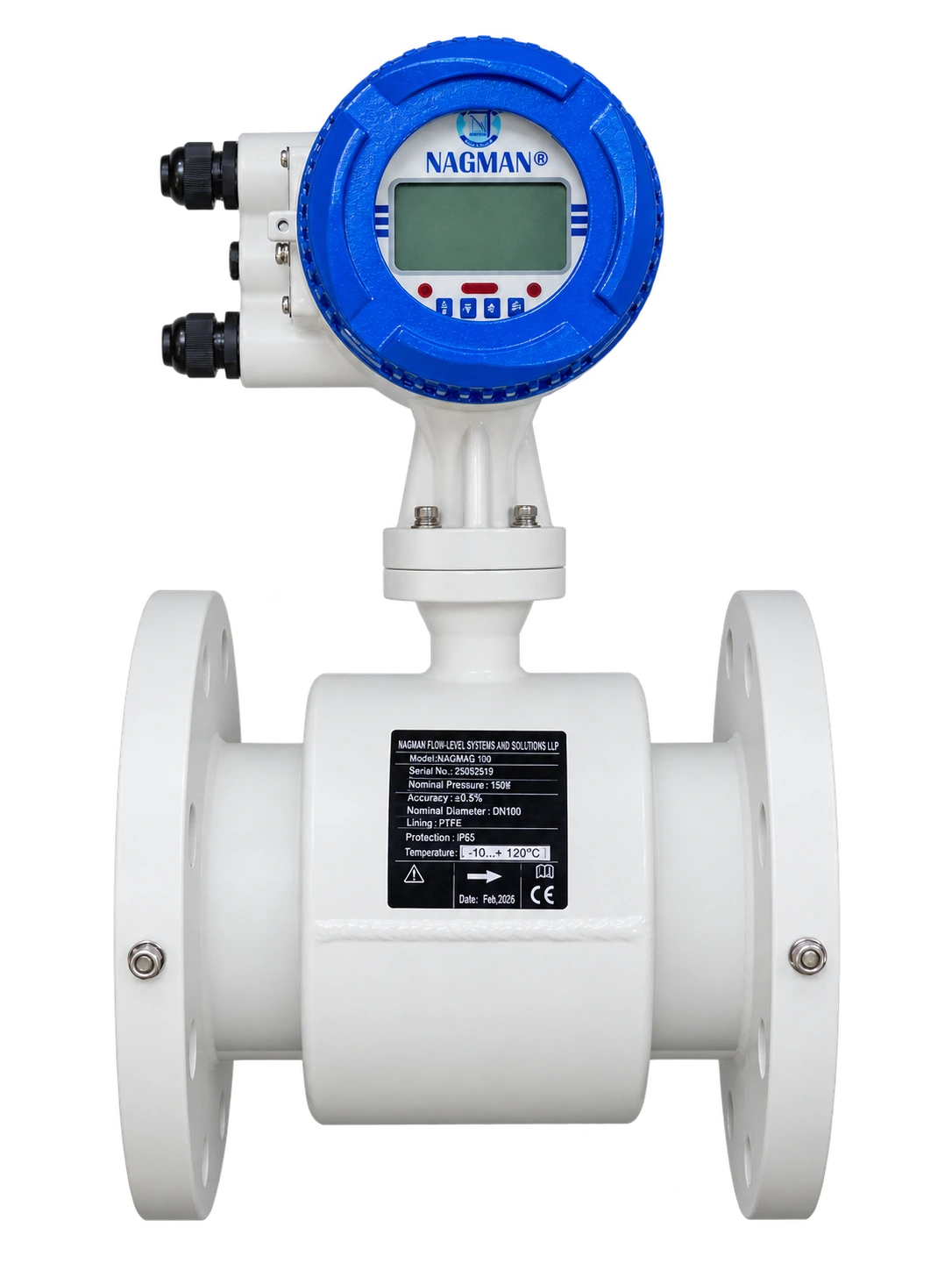
For off-grid sites that can use solar power. Share the location, available sunlight and monitoring duty so we can size the supply.
For solids-bearing liquids in applications such as pulp or mineral processing. Share the solids content and particle size so we can review the liner and electrodes.
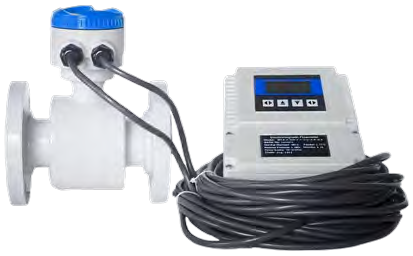
The everyday process companion.
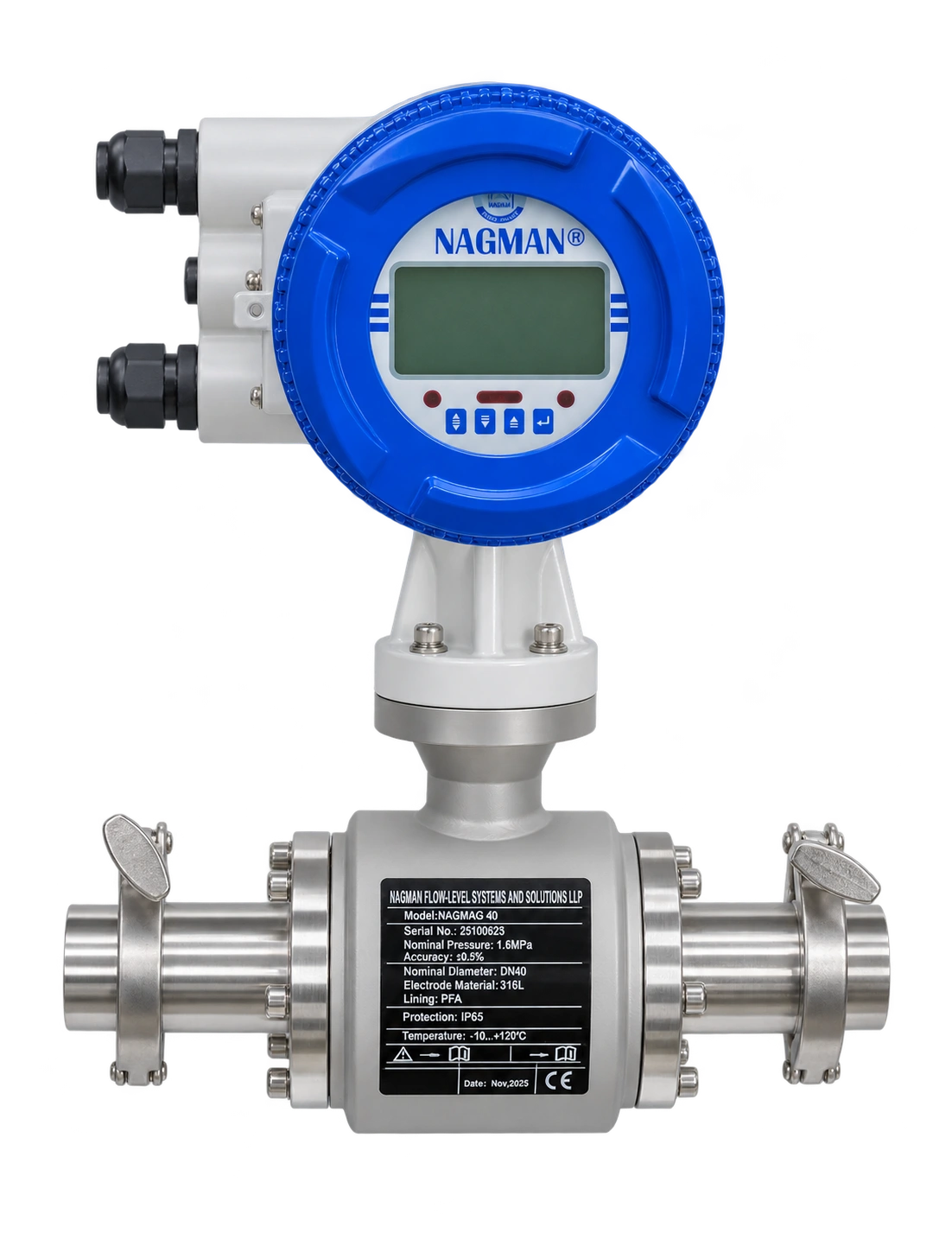
Sensor and transmitter together, with the display at the measurement point. A clear starting point for accessible process pipelines.
Put the display where you need it.
Separate the sensor from the transmitter for improved access, difficult locations or suitable higher-temperature configurations.
Designed around sanitary connections.
A sanitary design for compatible conductive liquids. Review tri-clamp connections, materials and cleaning conditions for your process.
A different approach to large pipes.
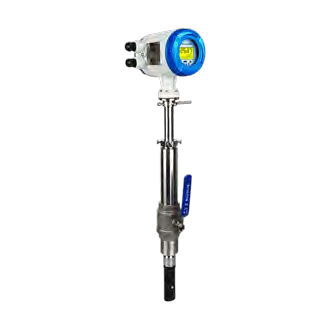
An insertion sensor option for suitable pipelines. Share pipe dimensions, material and flow profile so installation suitability can be assessed.
Economical electromagnetic
flow measurement for water.
For water supply and distribution, domestic & industrial utility water and irrigation.
Share your pipe size, water quality and expected flow range so we can confirm the suitable model for your requirement.
Start with where your team needs the readings. Use the local app for site visits or the web dashboard for remote monitoring. If readings need to travel off site, choose a connection that suits the installation. Complete with a Dashboard or Mobile application.
Record flow readings in the local app and review them during site visits.
Use it for on-site rounds An operator logging readings during a plant or utility inspection.
Review readings in a browser from connected pump stations, tanks or distribution networks.
Use it for remote oversight A supervisor checking several sites between field visits.
Choose how readings get from the meter site to the remote dashboard.
For an IoT enquiry, tell us where readings need to be viewed, what network is available at the meter and what power the site can supply.
Match the liner, electrodes and connection to the liquid, temperature and design pressure. For chemicals, include the concentration. For dairy, include the cleaning cycle.
Share the liquid, temperature, solids and cleaning conditions.
We review electrode compatibility against your liquid, concentration and temperature.
High-pressure flange option
Up to Class 1500
ASME/ANSI flange class on selected builds.
We confirm the assembly pressure rating for your size, materials and design temperature.
Compare measurement performance, installation requirements and available outputs across the NAGMAG family.
Confirm your minimum, normal and maximum flow before selecting a meter bore. Above range are for standard 0.5 - 5 m/s velocity.
| Size range | DN 3–3000 |
|---|---|
| Accuracy | ±0.5% of reading. Optional ±0.3% or ±0.2%. |
| Conductivity | Normal liquids: >20 μS/cm Selected slurry configurations: >5 μS/cm |
| Flow velocity | Catalogue sizing bands: 0.5–5 or 0.5–10 m/s. Optional 0.5–15 m/s. |
| Display & totalisers | Backlit LCD with forward, reverse and net totalisers. |
| Liquid temperature | Integral: −10 to 120°C Remote PTFE/PFA: up to 160°C, depending on configuration. |
| Pressure | PN 16 (16 bar standard). Other options PN 25 (25 bar), PN 40 (40 bar), PN 63 (63 bar), PN 100 (100 bar), PN 160 (160 bar), PN 250 (250 bar) |
| Documentation | Ask for the calibration certificate, material details and drawings required for your project. |
| Connections | ASME/ANSI Class 150 and 300 flanges, threaded, tri-clamp, wafer and insertion. Selected high-pressure builds up to Class 1500, subject to size, materials and design temperature. |
|---|---|
| Construction | Stainless-steel measuring tube. Carbon-steel housing and flanges are standard, with stainless steel available on request. |
| Power | 20–36 VDC or 85–250 VAC. 3.6 V battery and solar-powered configurations available. |
| Outputs | Analogue (0–10 mA or 4–20 mA), pulse/frequency and alarm options. |
| Communication | RS232, RS485/Modbus, PROFIBUS or HART by configuration. IoT telemetry over Wi-Fi, 4G or Ethernet. |
| Protection | Confirm the IP rating for the transmitter and sensor with the selected configuration. Standard IP 65 or IP 67 with optional IP 68 for remote transmitters. |
.
Conductive liquids such as water, wastewater, milk and compatible chemical solutions. The NAGMAG catalogue specifies conductivity above 20 μS/cm for normal liquids, with selected slurry configurations above 5 μS/cm. Confirm the actual liquid and configuration with our team.
Conductive acids and bases may be suitable after a material and operating-condition review. Share the exact chemical, concentration, temperature and pressure so a suitable liner and electrode combination can be assessed.
Start with the hygienic / sanitary design. Confirm the connection standard, wetted materials, product and cleaning temperatures, and any finish or hygiene-documentation requirements. Suitability is confirmed for the selected configuration.
Check the conductivity of RO water before selecting a magmeter; heavily purified water can fall below its conductivity requirement. Electromagnetic measurement is intended for conductive liquids in full pipes. Contact us to discuss another technology for non-conductive oils, gas or steam.
Integral combines the sensor and transmitter at the measurement point. Remote places the transmitter separately, which can improve display access or suit particular process conditions. Share the mounting location, ambient conditions and liquid temperature.
Start with the liquid, pipe size, minimum/normal/maximum flow, temperature and pressure. Add your preferred design, connection, power and outputs if known. For chemicals include concentration; for milk include sanitary and cleaning requirements. You can leave unknown details open.
Your selections follow you here. Complete the details you know; our engineers can help with the rest.